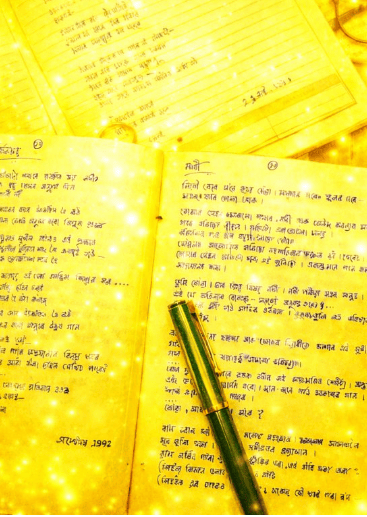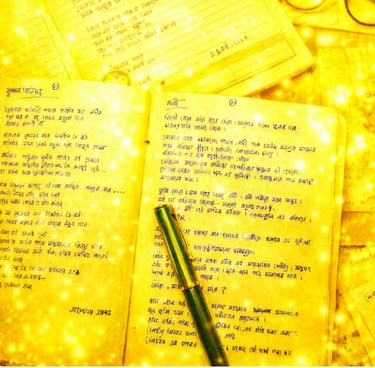
Unread
The doors of every heart will part,
at the first ancestral syllable,
sunlight breaks open.
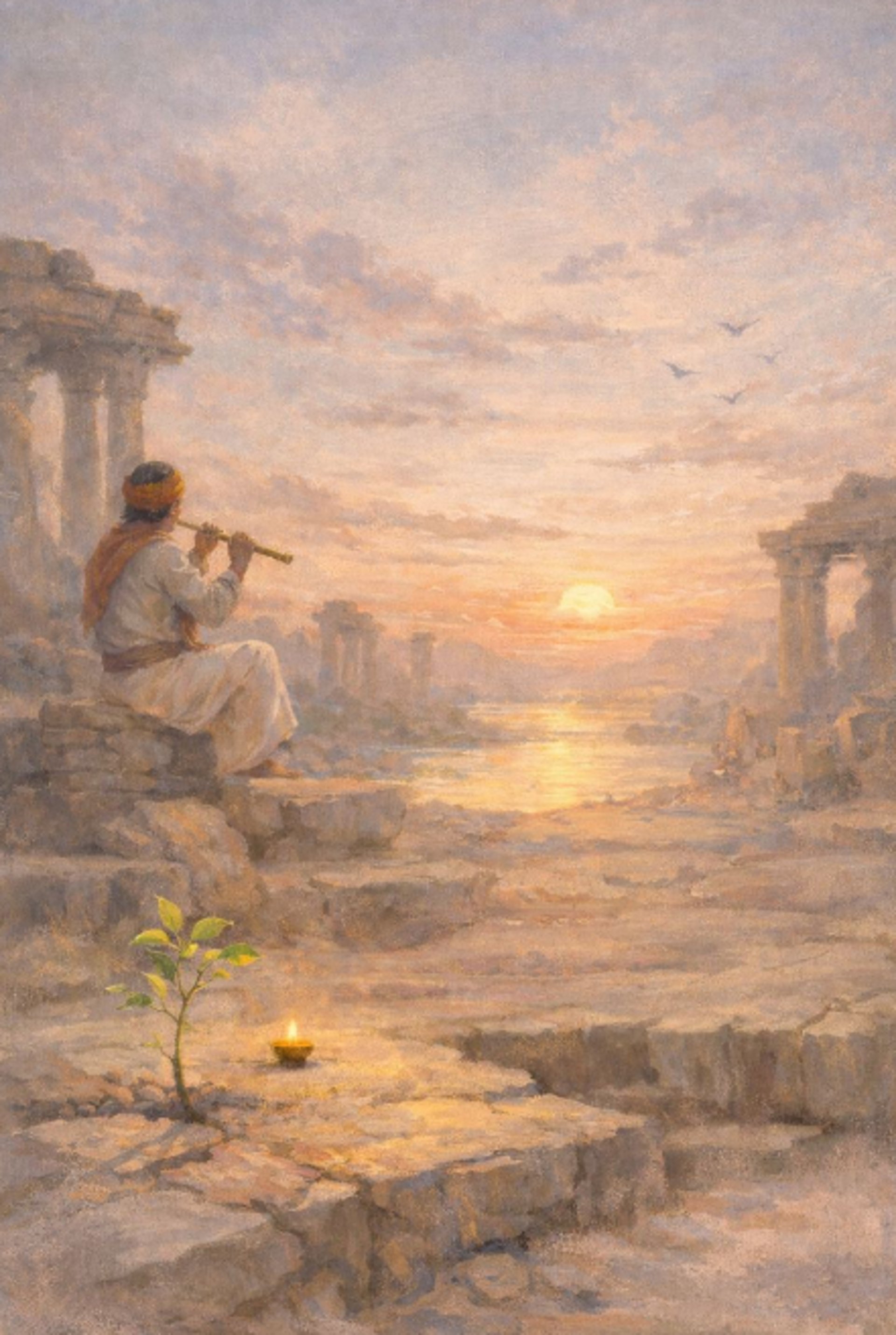
At times, temples will crumble,
and in the fissures of fallen walls
seed-mantras will take shape, in silence.
There will be moments when tenderness ripens—
a flute will play in secret,
its resonance left unfinished.
Each will compose a song of solemnity,
pressing the face into stillness itself,
drawing in the lingering warmth of light.
The seamless sky will sing its poems of flowers,
and under evening’s spell
the weary sun will return by its winding path.
One day, all doors will open—
the flute will play in secret.
__________________________________
1989
First published: Swastayan, Autumn, 1990
Editor’s Note
The Unread reflects awakening, continuity, and quiet transformation. Through images of ancestral voices, a shattered temple, and secret music, it suggests that destruction gives rise to renewal, and that silence itself becomes a site of tenderness and devotion. The recurring motifs of the flute and the opening door point toward a shared, inward experience—one that unfolds gradually without definitive resolution. The poem affirms faith in invisible connections and the enduring ecstasy of return.
Stylistically, the poem is shaped by restraint, repetition, and symbolic clarity. It privileges suggestion over explanation, drawing its language from spiritual and musical registers while remaining disciplined and accessible. Silence functions as an active presence, enabling forms of non-verbal communication. Rather than moving toward a dramatic climax, the poem advances in slow, circular movements, echoing ritual and continuity.
Select language
© 2026. All rights reserved.




Reach out for questions & collaboration
+91-9954060665