Select language
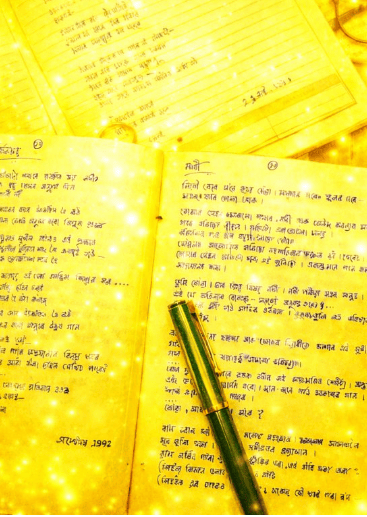
An Odyssey
Gradually, I lose myself
within you—
like a kite untethered,
distance loosening in the sky,
drawn into the hawk’s
wind-lashed wings.
In an old barouche,
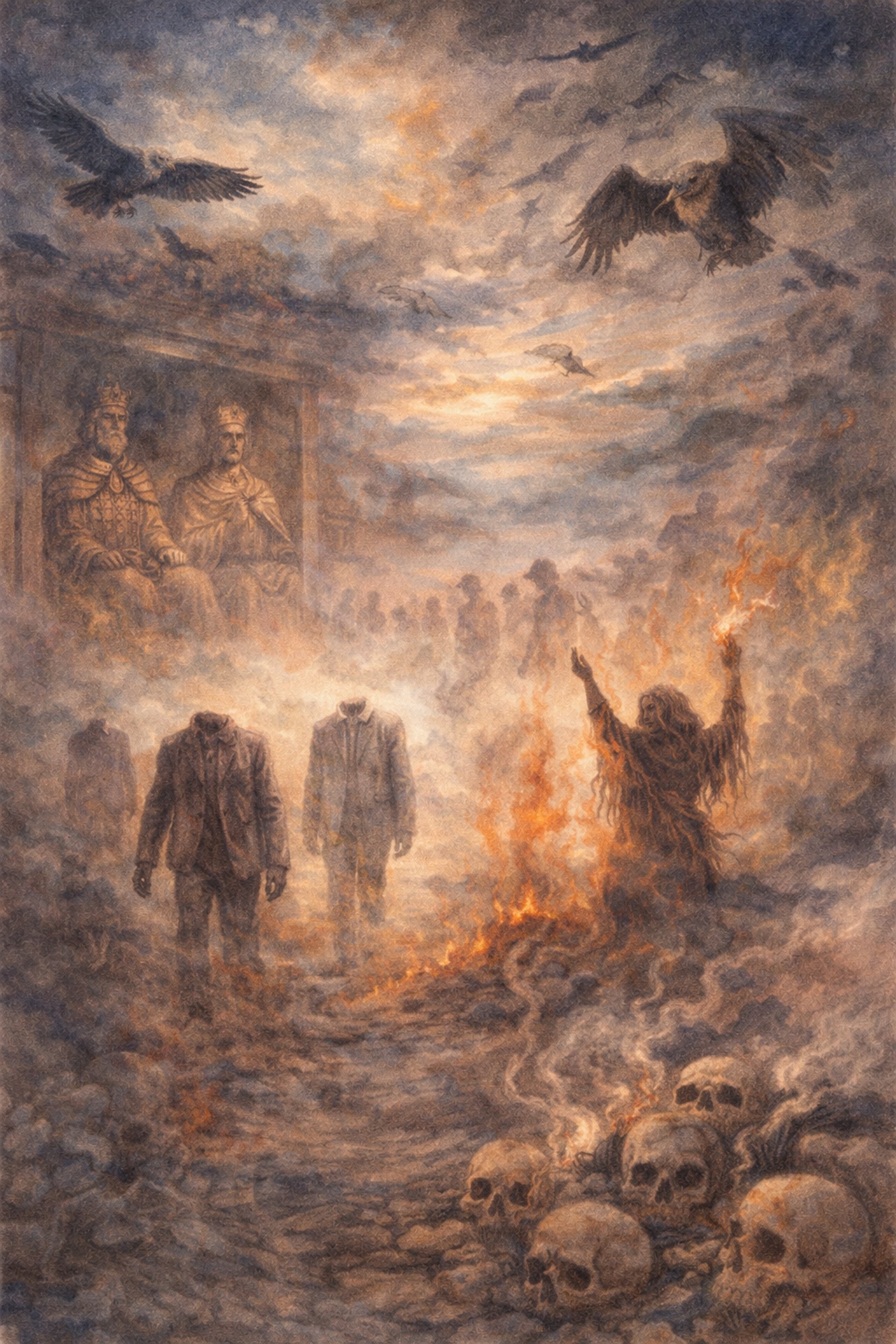
museum-locked kings and emperors,
fledgling bamboo cradles
in the grove
Clouds churn the sky—
the agitation
of an unnatural breath.
In fire, a multihued robe
twitches and writhes;
around the dancing witch’s neck,
the faceless citizenry.
Through the wind drift
weather-worn songs;
turning to smoke,
the days of youth
fly off, unclaimed.
Gradually, I lose myself
within you.
______________
1997, Nagaland
Editor's Note
An Odyssey reflects a process of decay—the erosion of the self, of time, and of political and emotional certainties. To be “lost within you” is not merely a romantic dissolution; it is a surrender before a larger, nameless force, signalling the loss of agency and authority.
The poem’s images confront one another across multiple registers—kings and emperors confined to museums; fire and witches; vultures and headless (unconscious) citizens; visions of youth that drift away as smoke, unfulfilled. These juxtapositions evoke a world where the stained chapters of human history are replayed, and where the cost of exploitation and repression by power-hungry rulers is borne by ordinary people. The phrase “the boundless distance of the sky” gestures towards a direction of freedom, yet liberation remains unattainable and impossible—predatory leaders, like hunting birds, keep constant watch over the populace.
An Odyssey stands as a lament. The voice is stifled, memory eroded, and resistance left unspoken.
© 2026. All rights reserved.




Reach out for questions & collaboration
+91-9954060665