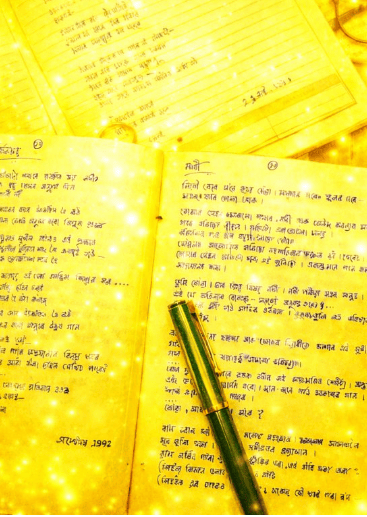
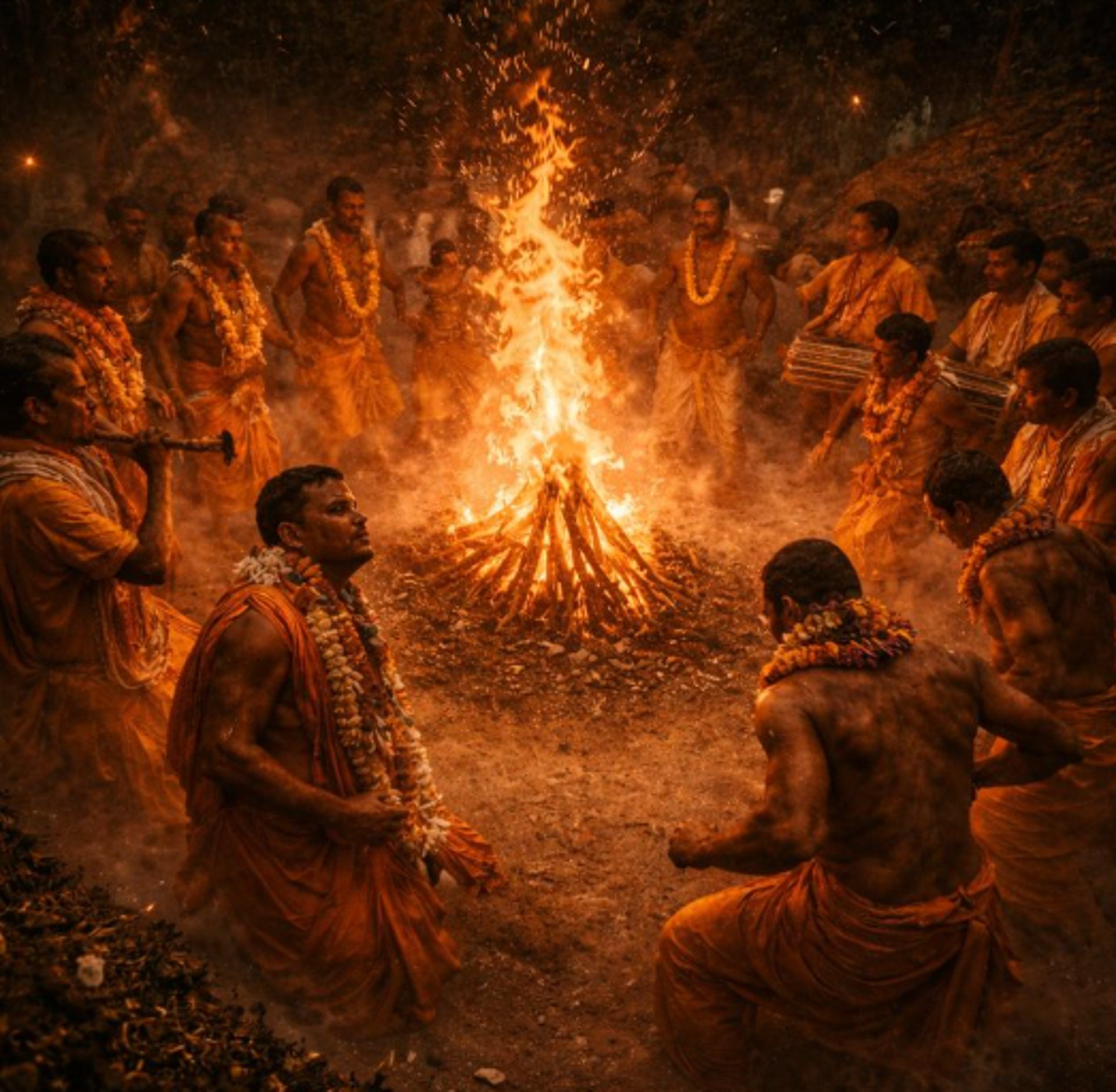
Dance, Deodhani Dance
Dance.
Dance, Deodhani, dance.
When you dance,
time steps forward
and the people gather.
With knowing hands
they press smooth seeds of hope
into the opened soil.
Time draws the fields
close to its heart.
Dance, Deodhani, dance.
When you dance,
the rain breaks loose—
torrents falling.
The river carries away
the hard days of sorrow.
From alluvial earth
good days rise,
green, and breathing.
Dance, Deodhani, dance.
When you dance,
childhood lifts itself
from the depth of soil.
Around the houses
gardens thicken with scent.
At the heart’s true address
constellations are drawn—
flowers,
and the memory of being young.
Dance, Deodhani, dance.
When you dance,
a thousand coloured flags
flood the sky.
Soldiers return home,
victory unshouldered.
The heat of struggle
moves on,
settling into folklore.
Dance, Deodhani, dance.
When you dance,
the grain-fields spill.
From the humility of prayer
songs rise—
songs of broken chains.
Along the long roads
travels
the scented breath of harvest.
Dance, Deodhani, dance.
Dance in blood.
Dance until night
loosens into dawn.
The warmth of blood
calls a season into being,
scattering the fragrant
dreams of life.
Dance, Deodhani, dance.
Dance.
____________
1993, Guwahati
Editor's Note
This poem draws from the ritual world of the Deodhani dance, where movement is not performance but invocation. The repeated imperative—Dance—functions as chant, calling forth time, rain, fertility, memory, and collective renewal. Here, dance becomes a cosmological act: it gathers people, heals grief, restores childhood, and folds struggle into shared narrative.
The progression of images follows an agrarian and historical rhythm—soil, rain, harvest, war, return—suggesting that community life is cyclic rather than linear. Celebration and labour, prayer and resistance, joy and memory coexist without hierarchy.
The closing turn toward blood introduces the poem’s ethical gravity. Sacrifice is not aestheticized; it is acknowledged as the hidden cost that makes abundance imaginable. The dance thus stands at the threshold between hope and loss, fertility and violence—where ritual remembers what prosperity forgets.
Select language
© 2026. All rights reserved.




Reach out for questions & collaboration
+91-9954060665