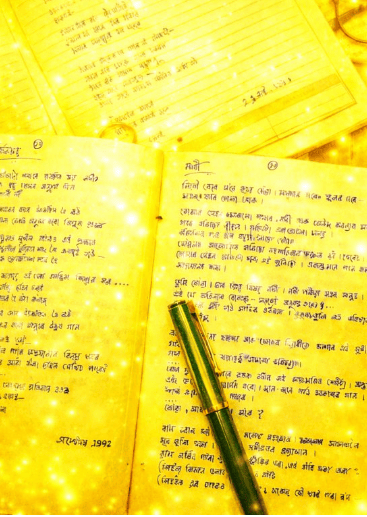
The Last Turning
1.
Let us return
along the road skirting light.
On the way home,
we leave behind
the shadow of a bird in flight.
Let time turn shadow—
a glimmer like fern-blossom,
a clearing
where hope gathers.
Let us return,
becoming evening.
2.
In a consecrated glow
a dead dream lies preserved;
deep violet holds
the frescoes of youth.
Let this breathless music
be given to silence.
Let it bend
towards the hollowed shade.
Darkness still clings,
yet light has learned to remain.
Let us return
as chant,
as a hymn.
3.
This path
may be the journey’s end.
In the listening of a mournful tune,
let the river’s familiar face
reveal its thread of sadness.
Let this gentle wind
stand still.
Let morning endure
as a fairy tale.
Let us return
as a message.
----------------------
02/09/1993, Guwahati
Editor’s Note
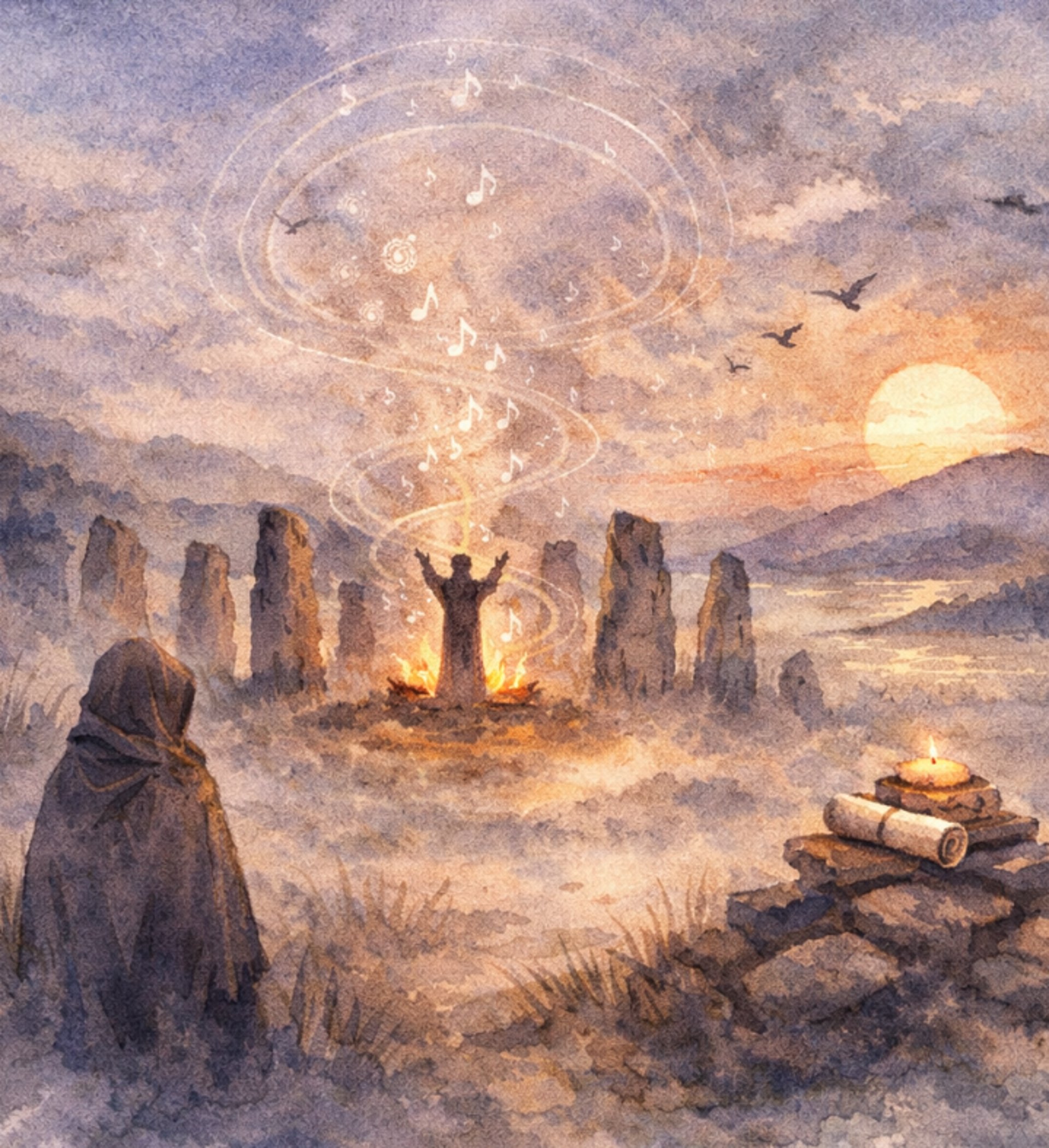
In The Last Turning, return is depicted as a silent transformation rather than a physical presence. Each section signals a stage of release: light dissolves into the softness of evening, memory settles into stillness, and the journey becomes static. Images of shadows, hymns, rivers, and wind create a tranquil, ritualistic atmosphere, where time slackens and emotions are gently held rather than resolved. Youth, loss and sorrow dissolve into light, music and stillness without any drama. ‘Come back’ is not a call to return, but to form—one that concludes not in an ending, but in a quiet message forged from attention and receptiveness.
Moving through a narrative and almost-mythical landscape, the poem suggests that what remains in the end is not an eternal truth, but rather a residue of presence: a voice that becomes a song, an entity that becomes an act of listening, and a journey that proceeds as a simple, timeless message.
Select language
© 2026. All rights reserved.




Reach out for questions & collaboration
+91-9954060665